
Supporting the Just Energy Transition
Real community benefits, the reality check − and how you can help!

For the past 12 years, Fossil Free South Africa has campaigned against the might and abuses of the coal, oil, and gas industries by going for the money − working to undercut the financial support that allows them to flourish.
With your support, we’ve had some real wins (read some stories here). But this battle is far from over. Fossil fuel companies still enjoy enormous power and privilege. Did you know, for example, that the South African government has leased over 95% of South Africa’s coastline to oil and gas companies?
Nonetheless, as renewable energy costs plummet, the transition to renewable energy is now inevitable − even if it’s not yet fast enough to avert the worst impacts of the climate crisis. This raises a critical question: as our energy system changes, who makes the decisions, and who benefits?
These are, or should be, the concerns of the Just Energy Transition (JET), a move away from coal, oil, and gas towards renewable energy in a way that is inclusive and socially just. At Fossil Free SA, we support a truly just and inclusive energy transition. Our role is not to build energy projects ourselves, but to help shape the social, financial, and political conditions that make such a transition possible.

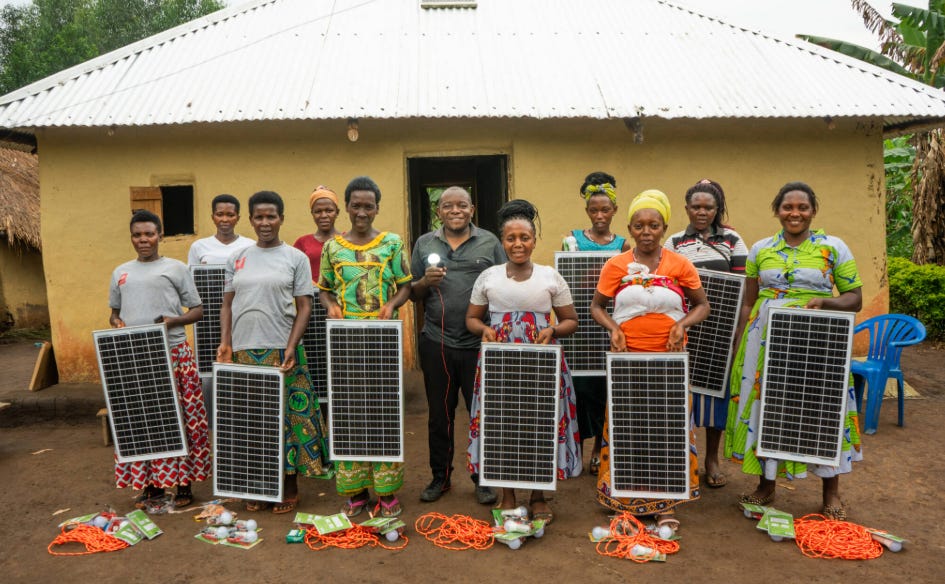
One of the most beneficial elements of South Africa’s JET is the emergence of Socially Owned Renewable Energy (SORE) − renewable energy projects that are owned, governed, or meaningfully shared by communities and workers.
These models are recommended by the Presidential Climate Commission, which advises government on how to address climate change through mitigation, adaptation, and the JET. They are also backed by trade unions and civil society organisations.
Zukisani Jakavula (pictured above in a video by Oxpeckers Investigative Journalism) grew up on Riverbank Farms near Hamburg, in the Eastern Cape. After recognising the potential for a wind farm on local land, he undertook the painstaking work of tracing the descendants and current owners of land whose title deeds were last updated in the 1800s, with help from an international partner, as documented by Oxpeckers.
Eventually, 11 landowners were identified. Today, the Wesley-Ciskei Wind Farm allocates 1.5% of its revenue to these families and is often cited as a rare example of a renewable project delivering direct community benefit in a province where most wind farms are located on white-owned farmland.

Despite these examples, socially owned and community-benefiting renewable projects remain rare.
South Africa’s Renewable Energy Independent Power Producer Procurement Programme requires community trusts to hold a 2.5% equity stake for socio-economic development. Yet Oxpeckers’ #PowerTracker reveals that only 15% of all renewable energy projects in South Africa offer any form of community benefit.
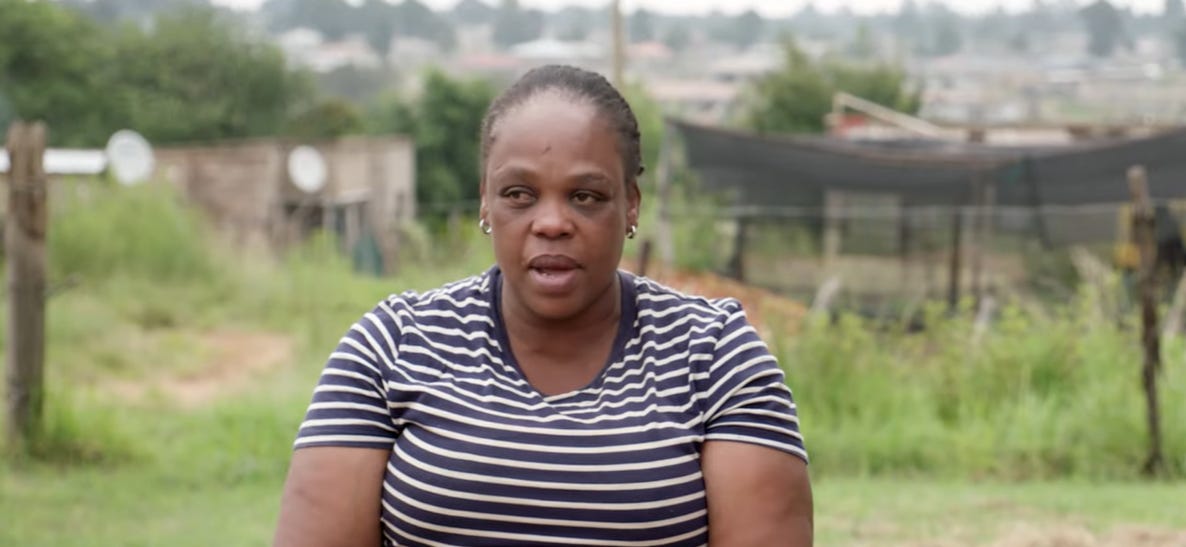
Meanwhile, many communities continue to bear the costs of South Africa’s fossil-fuelled economy. “We can say that the mines are giving people jobs so they can feed their families. But at the same time, they are killing people,” says Sibongile Masina (pictured above) of Empumelelweni, Mpumalanga, in the groundWork film Our Light, Our Power.

There are several ways you can support and amplify the work of Fossil Free SA and our fellow NPOs advocating for climate justice and the JET:
Stay informed and share: Help cut through greenwashing by sharing accurate information about what a real JET requires − such as this newsletter − with someone who may be interested.
Support community power: Follow and amplify the work of organisations and movements advocating for community- and worker-owned energy.
Push on finance: Support Fossil Free SA’s campaigns pushing financial institutions and public bodies to stop funding fossil fuel companies − the start of enabling a far-reaching JET.
Demand leadership: If you’re a university student, academic, or employed by a South African university, demand that your university takes climate justice seriously.
Support our work: Your donations and solidarity help us continue challenging fossil fuel power and catalysing support for a just energy future.
The energy transition is under way. The question is whether justice comes with it. Every action for energy justice helps build the momentum.